



Story
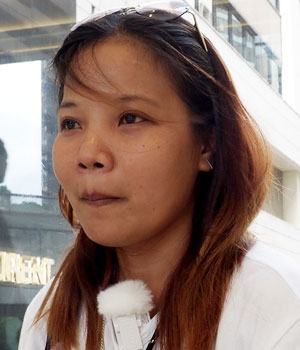
Paz
Paz
“it's expired. It have molds.”, said Paz, who is now 41 years old, as she told about the food issues faced by the migrant domestic workers. Although Paz herself never had faced such employers, but some of her friends, also domestic workers, got employers that aren’t even willing to give proper, human food to them.
Legally speaking, it is mandatory by law that the employers should provide food for their helpers, or give an amount of money for the helpers to get food themselves, many domestic workers actually are not getting food. The food could be expired, like some of Paz’s friends’, or not being given at all, without any cash compensations.
This is especially a big problem for the helpers since according to Paz, “you are working for mostly 12 hours”, meaning that although not labor-intensive, the daily workload is still something quite tiring to finish. For some workers, who chose to work for more than 20 hours a day, for more wage, the lack of proper, healthy food plus the overworked conditions could be a significant health risk.
Despite facing many difficulties and is required to do lots of household chores, the wages of helpers are not generally high: “like 5000 to 6000...but it’s just like a minimum wage”, said Paz. This is not a large amount of money, considering the expensive expenses in Hongkong, meaning that although having free housing and food provided by their employers, the helpers will still find saving up money for themselves and sending money back home is a tough job for them.
As for the employers, Paz consider herself rather lucky, for her experience with the employers is rather close: “For me, my employer will treat me as a family”, lots of freedom is allowed to her, and she is treated with enough respect. But for many other helpers, their experience with the employers is a totally different story. Many employers, may well ask the helpers to clean something that had already been cleaned by the helper many times, for they believe it is not clean enough, despite the fact that their knowledge in cleaning things is probably less than that of the helpers. The presence of a small children can also greatly impact the experience of a helper, they will have to stay awake in the middle of the nights, to calm crying babies, as well as endure playing with some older children after a day of tiring chores. Paz used to sleep late due to the daughter of her employer playing or watching TV, but fortunately, she is now 11 years old, old enough to not watch TV or insist to play with Paz until it is very late.
“If you're a teeth will be damaged. It's not included in the insurance.”, said Paz, when we asked her about insurances. According to law, the employers should be responsible for taking care of their helpers when they are sick or injured, many employers (some may choose not to, possibly believe that nothing bad could happen to the helper) prefer to buy insurance for the helpers. Unfortunately, this insurance usually is unable to cover many common injuries, such as a broken tooth, as mentioned by Paz. This put the helpers into the jeopardy of having to spend their own money to buy medicine, see doctors, etc. since the employers can claim that they have already done the responsibility of buying an insurance.
Being sick can also mean the breaking of the contract with the employer: unlike non-migrant domestic workers, who can choose to be part-time helper and can ask their employer to unbook a session, MDWs can only live in the employer’s house. Therefore, when they are sick, the employer will have to take care of them, provide the necessary food, prepare meals, etc. while the helper is unable to work. Of course, this is too troublesome for the employers, especially when they paid to get someone to clean the house for them, someone to help them, not themselves to help others. Some employers may choose to simply end the contract, kicking the still-sick domestic worker on to the street, without any place to live. As for the regulations regarding the termination of contracts with domestic workers, it did not say the employers can end contracts due to sickness, but neither did it forbid them to do it. Therefore, the employer can simply claim the helper is “neglectful of his/her duties”, which is a reason that the regulation states could be used to end a contract, and dismiss the helper without any prior notice nor compensation in payment. However, given that free legal consultation is provided to anyone in Hongkong, it could be possible for a helper to sue their employers, but even if that is the case, it will probably just result in compensation in money and the helper not being wanted by possible employers.
“I can say that I am the luckiest person because of the kind of work that I have.”, said Paz, still optimistic despite the many obstacles faced by the helpers. Although the future may seem dark, but with the internet, helpers may publicize their experiences, gaining the public’s attention and get the problems solved.