



Story
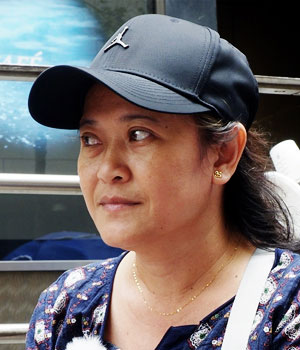
Rowena Borha
Rowena Borha
Rowena Borha had a more than tough life in her home in the Philippines. Her parents separated when she was 7 years old due to domestic violence. Her father was a smoking alcoholic and allegedly committed adultery. Her mother single-handedly raised her and her younger siblings by planting rice, and when she was 18, she already started to work multiple jobs in order to support her family's livelihood, and earn enough money to pay for her brother and sisters' education. She gave up getting her college degree, finished high school, and sacrificed her own happiness to give the people she loved a good future.
Rowena worked as a grocery sales lady, a domestic worker, and a factory worker after moving to Hong Kong. She was encouraged by a friend of her mother's to come to Hong Kong. After all, it was close to the Philippines.
At 22 years of age, Rowena came to the City of Skyscrapers, with no friends or cousins or any familiar people there. As a domestic worker, she has duties such as going to the market to buy groceries, clean the house and do household chores, and walking the dog. “Popo”(pronounced Puo puo), the grandmother of the family, cannot speak english. So, Rowena learned cantonese in order to adapt to her surrounding environment, the foreign land she was to work in.
Now, she is 54 years old, working in Hong Kong for more than 30 years and since had six employers.Two of them had abused her emotionally and physically. She recalled her first year in Hong Kong, "Every time they have a tantrum, whatever things that they have in their hand, they will throw to you or hit you." She was shouted at by the employer whenever she did something wrong. It was like being stuck in a bell jar, unable to escape, wrapped in self-pity that eats at her personhood. It was an alienating experience to be abused. It was also necessary to remain silent under the pain, to shut up about abuses, not to speak of it to her family to prevent them from worrying. Rowena has to pay a loan back in the Philippines and one that she has to pay in the agency. Regarding that it is terribly hard to find a job as a migrant worker, that it is essential to avoid "job-hopping", a term used to describe a situation where the migrant worker changes her employer without finishing the contract. "So that's all we are, we bear it because we just want to to have work to have a job in Hong Kong and we will not fall into the so called job hopping."
Passionate about fighting for the rights and protection of workers like her in Hong Kong, she works as a volunteer in the progressive labour union of domestic workers every Sunday and hands out pamphlets that educate migrant workers about the basic rights and protection in Hong Kong, give them some help and advise, benefits like the wages in regard with the contract.
Some common problems regarding worker and employer relationship in Hong Kong is that the employers have access to their passports, their phones, and physically and verbally assault their workers. They keep their passport and contract so they can't borrow money from the bank. If they wanted to report any abuse, they would have to call a privacy ordinance and provide photo or video evidence. Meanwhile, the government takes as little involvement in these malpractices as possible, making it easy for employers to exploit Rowen's and other workers' labour. These issues raise a huge problem for those migrant domestic workers in Hong Kong, and little awareness about it may lead to further marginalization of these women.
Finally, despite the terrible and insufferable working conditions, Rowena has devoted half her life to helping her blood-related family and other families who are not blood-related, without even having a family of her own. Due to the pandemic, she didn't go back and visit her family for three years; migrant workers under normal circumstances visited their family every two years. So when she went back to them in April this year, there was more joy, happiness, excitement, anticipation on what they would eat, the places they'll visit: a family reunion. She hopes to open a small business when she gets back to Philippines, hoping it might give her more time to spend with her aging mother, and her brother and sisters.